The Tukdam Study

The first attempt of data collection occurred in September 2008 with the passing of the 100th Gaden Tripa, Lobsang Nyima Rinpoche, who remained in the tukdam state for 18 days.
The case above occurred in January 2022, the second longest tukdam state documented — 27 days. In March 2021 was the longest — 38 days. Both are detailed in the most recent forensic publication.
As of March 2026, 61 cases have been documented by the Tukdam Project.
Phase I. Baseline intravital study
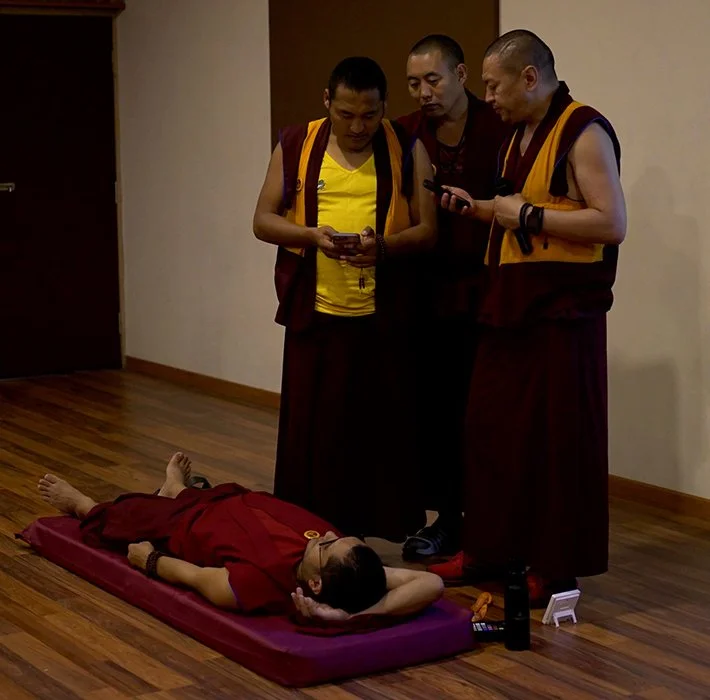
This phase aims to examine psychophysiological, physiological and biological features of practitioners that are associated with meditation practice as well as identify potential factors that contribute to speed of decomposition postmortem.
Phase II. Perimortem study
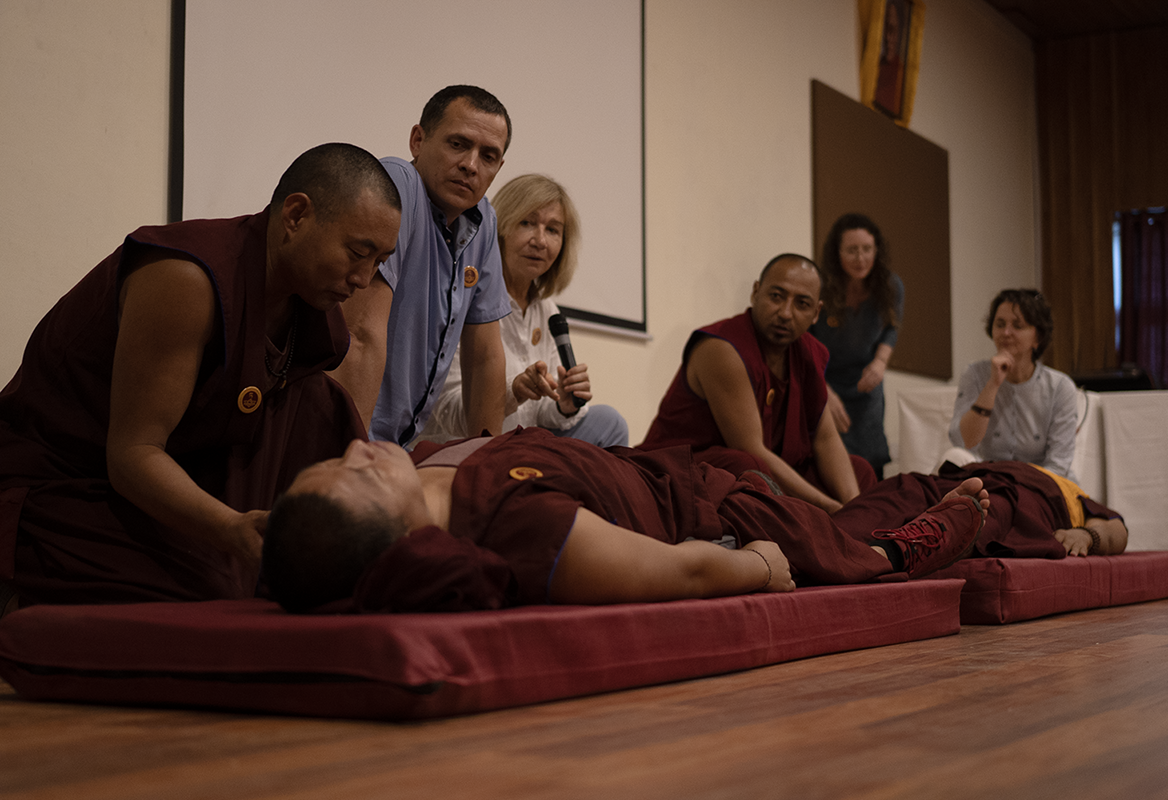
The aim of this phase is to investigate the transition process shortly before and immediately after biological death in meditation practitioners. This phase studies features of attenuation of psychophysiological, physiological and biological function in the brain and body as well as identifies potential factors that affect the dynamics of postmortem biological processes. To date, the project has not been able to observe any practitioners transitioning through phase II as participants approach death. However, the study design would facilitate regular intervals of data collection on these measures through the perimortem period. Following phase II, participants would be divided into those who are later deemed tukdam cases and those who are not.
Phase III. Post-mortem study
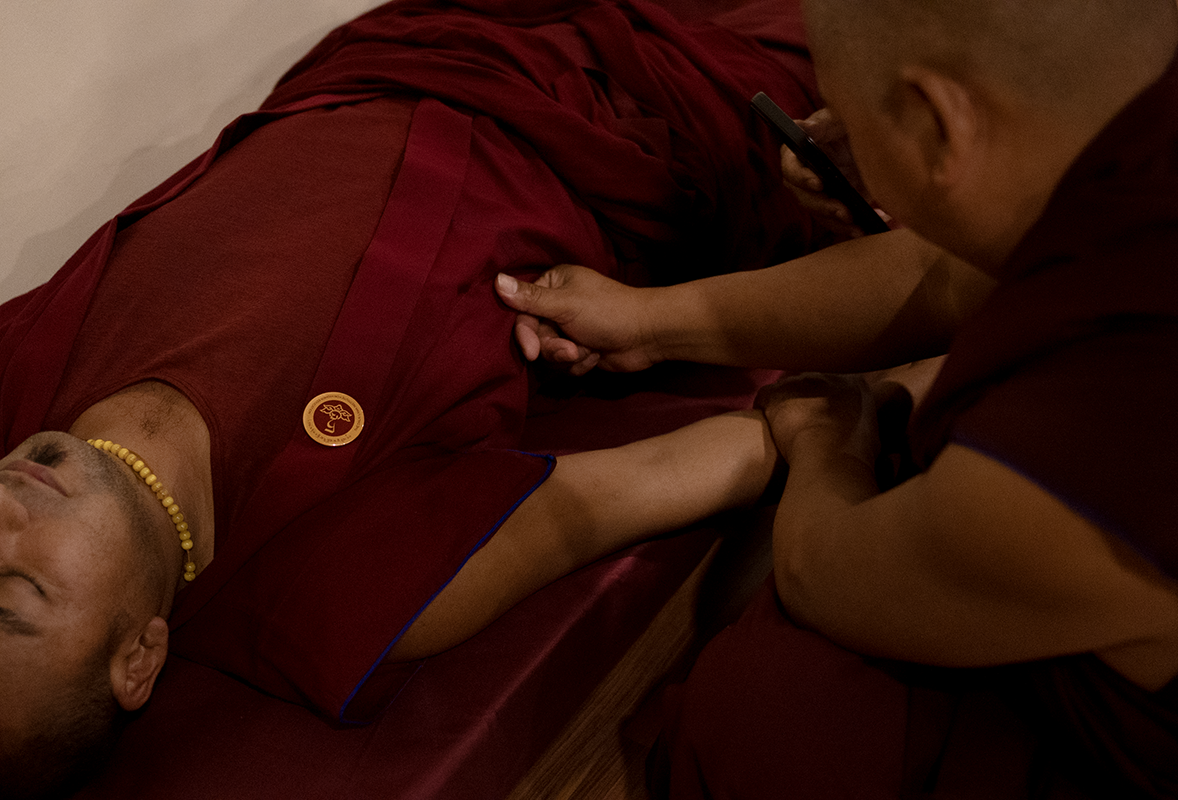
This phase aims to observe the dynamics of biological processes in the brain and body of meditation practitioners days after diagnosed biological death. Frequently the team is not notified till 3 or more days after clinical death due to the time period commonly observed before a tukdam state is declared. Though the team attempts to study any meditation practitioner or community member immediately entering a postmortem phase to collect control cases, as well.
The study currently primarily collects postmortem data for the postmortem phase of our study design. However, historically we have conducted, and post-pandemic we are implementing again, all three of our phases. The data for these three phases are collected either sequentially (as a full cycle long term study) or in parallel (as partial studies of different phases with different subjects), including living baseline, perimortem, and post-mortem phases.
Phase III is currently active, with plans for data collection in Phases I and II to resume again soon.
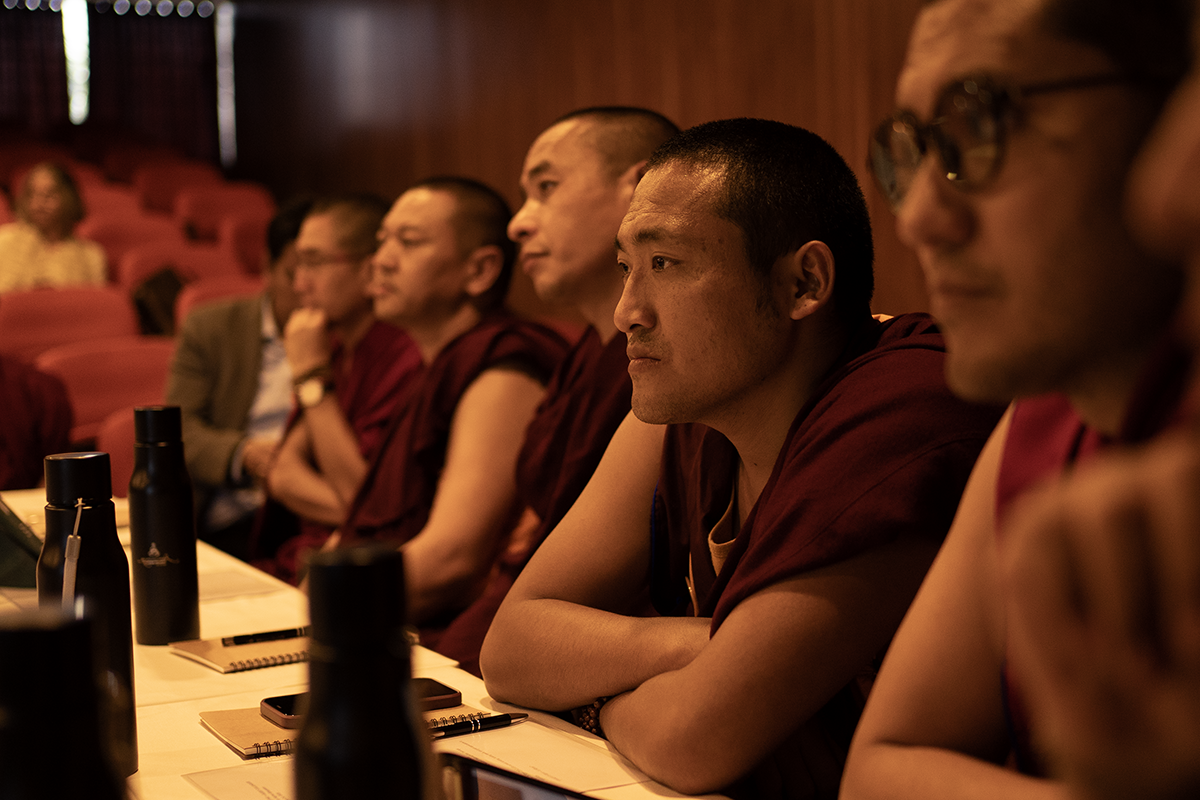
Russian Co-PI Dr. Alexander Kaplan discusses how to study Tibetan Buddhist meditation by scientific methods with the Dalai Lama, March 2022
UW-Madison Co-PI Dr. Tawni Tidwell presents the Keynote Address “Can the Arc of Life and Death Culminate in a Single Moment?” on the study design and methods of the Tukdam Project at the ISCR Conference November 2025
-
All phases include:
Questionnaires: used to collect participant information on medical history, demographics, meditation experiences, experience of attentional qualities, history of their personal meditation practice and a general life history. This information is collected from the practitioner in phases I or II and from the practitioner’s family or attendants in phase III, if it is known. Any available medical records are collected from the participant or relevant medical institution.
Baseline physiological assessment: used to assess physiological condition of experienced monastic and layperson practitioners during several data collection sessions.
Data is collected during resting state, mismatch negativity task and auditory brainstem response task and may involve the following measures given consent and comfortability of the participant:
Electroencephalography (EEG) using a set of flat active electrodes on the head
Electrocardiography (ECG) using electrodes secured below right collarbone and left lowest floating rib
Blood oxygenation monitor on finger
Skin temperature and skin temperature distribution collected through Infra-Red Temperature Imaging System (IRTIS)
Oxygen partial pressure of the skin and blood oxygen saturation using pulse oximetry
Carbon dioxide production using capnography nasal cannula
Blood tests (phase I and II only)
Photographs and videos to document changes in skin color and hue variations, quality/position, etc.
Additional data collection in phase III: the postmortem period phase III data collection uses the same measures as phases I and II with the addition of the following measures for forensic analysis by forensic experts:
Body temperature assessments across pre-specified locations
Skin color change assessments
Skin turgor analyses
Rigor mortis assessments
Livor mortis assessments
Photos (grayscale/color calibration cards allow for image comparisons across lighting conditions and cameras)
Standardized Munsell color hue assessments across body regions
Continual video footage
Observational notes on presence of insect activity, emitted fluids such as purge fluids or other fluid emissions important to the tradition
Humidity and temperature recordings of the room and outdoor ambient environment
Measures in development:
Oral microbiome analysis via buccal mucosa swab
Volatile organic compounds (VOCs) in air proximal to body via sorbent tube
-
Aria 1993. The Function of the Hypothalamo-Pituitary Axis in Brain Dead Patients. Acta Neurochirurgica 123(1-2): 64-75.
Auyong et al. 2010. Processed Electroencephalogram during Donation after Cardiac Death. Anesthesia and Analgesia 110(5): 1428-1432.
Borjigin et al. 2013. Surge of Neurophysiological Coherence and Connectivity in the Dying Brain. PNAS 110(35): 14432-14437.
Brefczynski-Lewis et al. 2007. Neural correlates of attentional expertise in long-term meditation practitioners. PNAS 104(27)
Chawla et al. 2017. Characterization of end-of-life electroencephalographic surges in critically ill patients. Death Studies 41(6): 385-392.
Grigg et al. 1987. Electroencephalographic Activity after Brain Death. Archives of Neurology, 44(9): 948-954.
Norton et al. 2017. Electroencephalographic Recordings During Withdrawal of Life-Sustaining Therapy Until 30 Minutes After Declaration of Death. Canadian Journal of Neurological Sciences 44(2): 139-145.
van Rijn et al. 2011. Decapitation in Rats: Latency to Unconsciousness and the "Wave of Death." PloS One 6(1): e16514.Xu et al. 2023. Surge of neurophysiological coupling and connectivity of gamma oscillations in the dying human brain. PNAS 120(19):e2216268120.
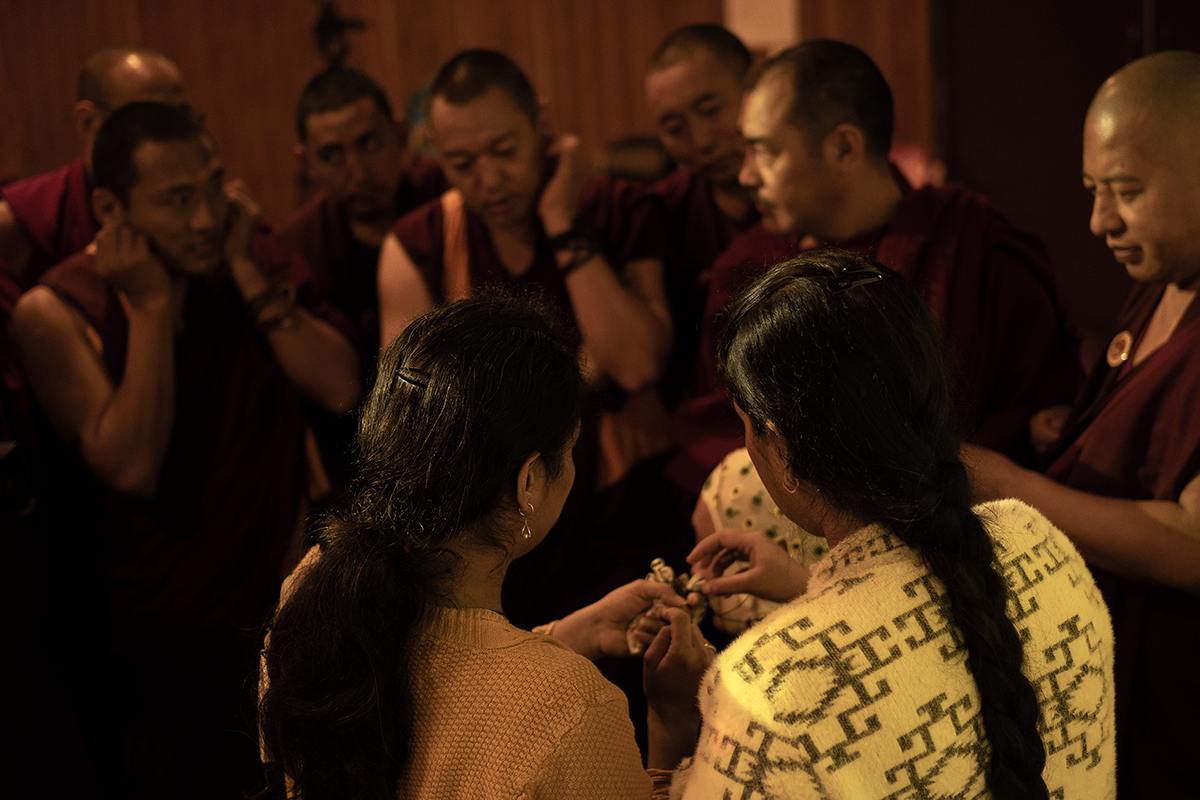
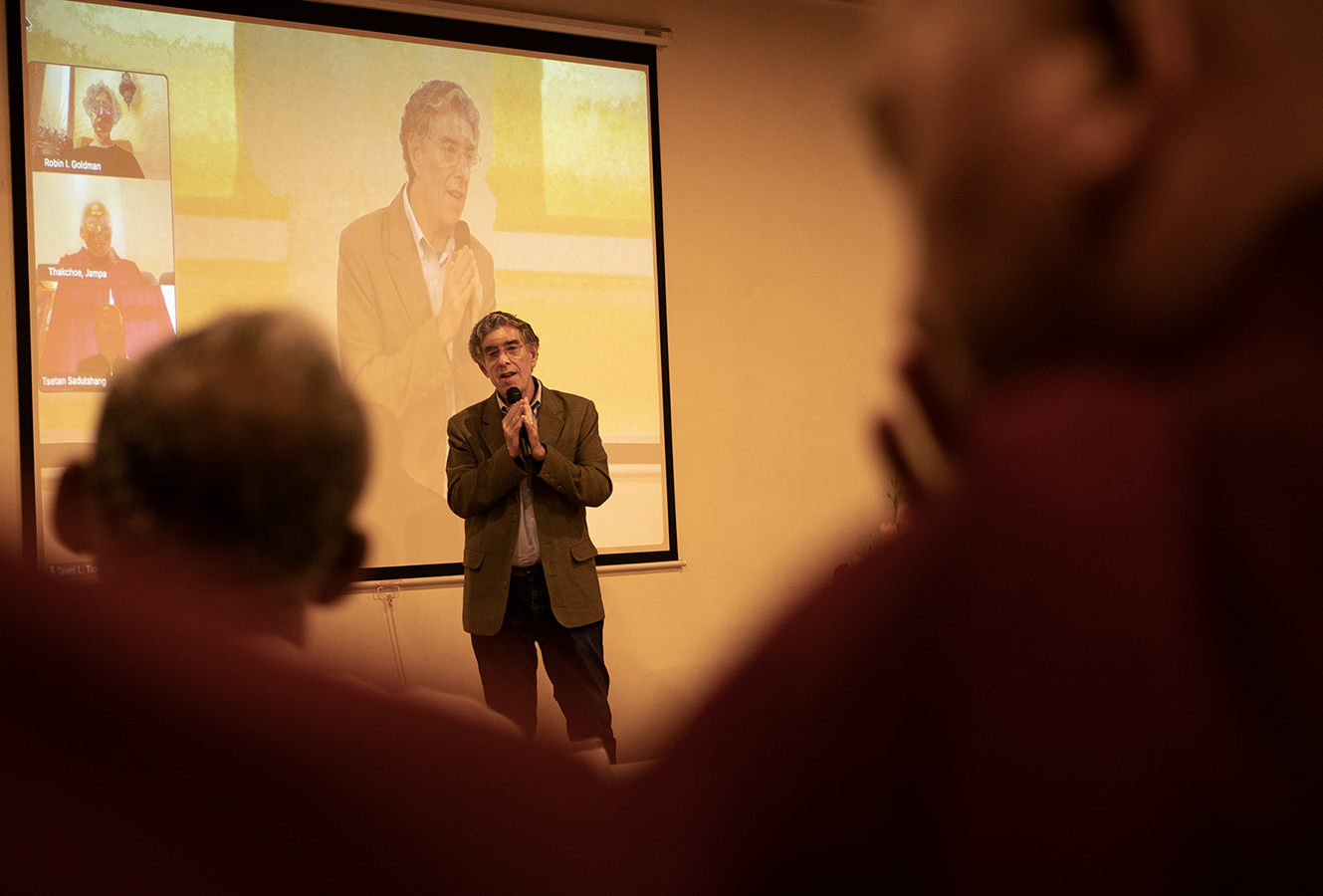
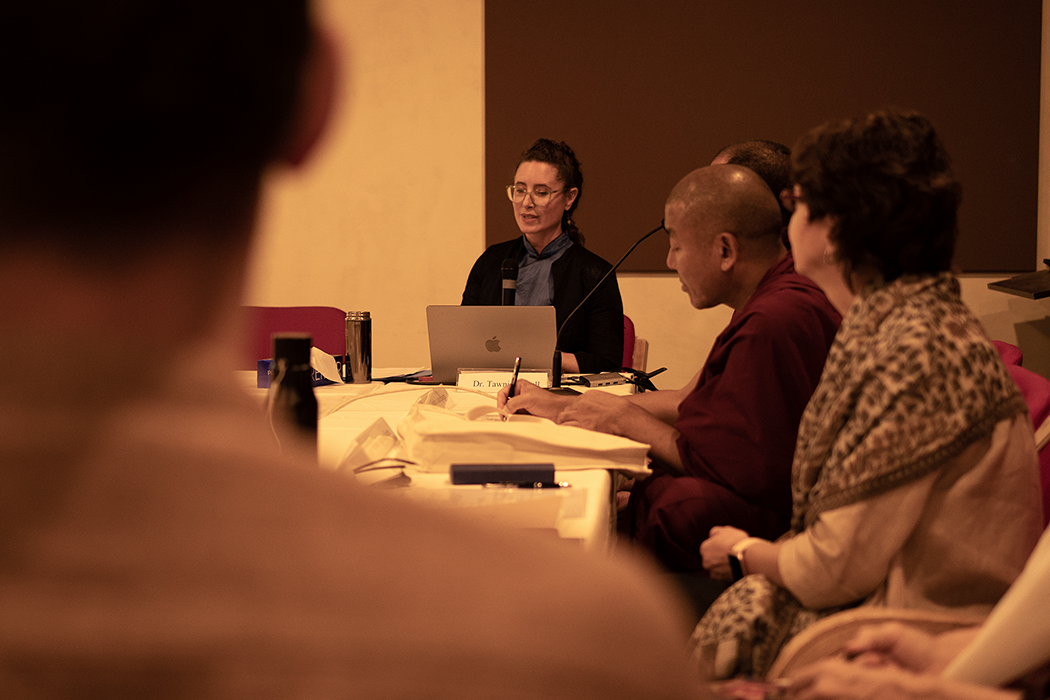
2025 Annual Meeting at Dalai Lama Institute for Higher Education to develop next phase of study design and methods, Bangalore, India
Publications Related to Tukdam
Delayed decompositional changes in indoor settings among Tibetan monastic communities in India: A case report, Forensic Science International: Reports, Tidwell et al. (2024)
No Detectable Electroencephalographic Activity After Clinical Declaration of Death Among Tibetan Buddhist Meditators in Apparent Tukdam, a Putative Postmortem Meditation State, Frontiers in Psychology, Lott et al. (2021)
Tukdam Special Issue in Culture, Medicine, and Psychiatry "Liberating Mind at Death: Ontological Realities and Discourses with Science in Tibetan Tukdam Post-death Meditative State", Tidwell, guest editor (2025)
Introduction: Embodying a Liberated Mind at Death, Tidwell (2025)
Death and Happiness: Exploring the Temporalities of the Meditated Death and Everyday Life in Tibetan Buddhist Practice of Tukdam, Namdul (2025)
Life in Suspension with Death: Biocultural Ontologies, Perceptual Cues, and Biomarkers for the Tibetan Tukdam Postmortem Meditative State, Tidwell (2024)
Thanato-technics: Temporal Horizons of Death and Dying, Lott (2024)
Tukdam, Different Ontological Bodies, and Making Tibetan Deaths Visible, Coleman (2025)
Commentary: A Few Comments on Thinking Through Tukdam, Adams (2025)
Re-Examining Death: Doors to Resilience and Wellbeing in Tibetan Buddhist Practice, Religions, Namdul (2021)
The Biographical Process of a Tibetan Lama, Ethnos, Zivkovic (2010)
Death and Reincarnation in Tibetan Buddhism: In-Between Bodies, Routledge, Zivkovic (2014)
Facilitating an Ideal Death: Tibetan Medical and Buddhist Approaches to Death and Dying in a Tibetan Refugee Community in South India, PhD dissertation, Emory University, Namdul (2019)
Resting Between Worlds: The Ontological Blurrings of Tukdam, Master of Arts Thesis, University of California, Berkeley, Coleman (2017)
Feature Length Documentary
Tukdam: Between Worlds Trailer
Donagh Coleman, documentary filmmaker and Berkeley medical anthropology doctoral candidate, follows the Tukdam Study 2019-2020 before the collaboration expanded to its current size. The film captures the tension still present for the study today of two intellectual traditions investigating a phenomena using distinct methods of inquiry and understandings of consciousness, life, and death. A television version of the documentary provides further interviews including observations from attending physicians during the 16th Karmapa's passing in Zion, Illinois. Since the filming, the team has integrated more extensive forensic measures and and collaborators, as well as inquiry into the meditation practices themselves.
Media