History of the Tukdam Project
This ongoing research investigation began in 1995, during a conversation between affective neuroscientist Richard Davidson and His Holiness Tenzin Gyatso, the XIV Dalai Lama, at a Mind & Life Dialogues event in Dharamsala, India. The Dalai Lama described the passing of his former tutor and the 97th Gaden Tripa (head of the Geluk school of Tibetan Buddhism), Kyabje Yongzin Ling Rinpoche (1903 - 1983), who passed in a state called tukdam. He described tukdam as a meditative state achieved at the time of death, where the practitioner gains ultimate realization into the fundamental nature of mind and shows a delay in the normal timeline of physiologic processes typical after death.
Ling Rinpoche remained in the state for 13 days, exhibiting a fresh life-like appearance in the humid subtropical climate of Dharamsala until the thirteenth day when initial decompositional signs appeared. When the tukdam state is released, it is said the consciousness departs the body and the meditation on the clear light mind at death has ceased.
-
The Tukdam Project arose out of a conversation between affective neuroscientist Richard Davidson and His Holiness Tenzin Gyatso, the XIV Dalai Lama, in 1995 during one of the Mind & Life Dialogues held in Dharamsala, India, one of numerous exchanges between scientists and Buddhist scholars. His Holiness described the passing of his personal tutor Kyabje Ling Rinpoche, the 97th Ganden Tripa as Head of the Geluk School of Tibetan Buddhism, in 1983. Kyabje Ling Rinpoche resided in the state of Tukdam for 13 days without undergoing normal signs of decomposition and retaining a warm radiant complexion, elasticity to the skin, and fragrant odor. His Holiness described that from the Buddhist perspective, subtle consciousness remains at the heart region during this state as the practitioner remains engaged in the meditation of the clear light at the moment of death. The invitation to initiate the study was to bring the best of science across disciplines to explain the underlying mechanisms of the state.
-
Renewed interest in the project led the team to begin pilot work on thermal imaging to assess tukdam cases since one of the primary signs of tukdam recognized by the Buddhist tradition is a remnant warmth around the heart region where the subtle consciousness is understood to remain inside the body reliant upon subtle physiological activity still present there.
-
The project formally began in 2007 as a collaboration with the Office of His Holiness the Dalai Lama, Men-Tsee-Khang — the Tibetan Medical and Astro-Science Institute under the auspices of the Dalai Lama, its biomedical partner Delek Hospital and the Center for Healthy Minds of University of Wisconsin-Madison.
The Principal Investigators comprised Dr. Richard Davidson from CHM and two of the Dalai Lama’s personal physicians – his Tibetan medical physician Dr. Tsewang Tamdin and his biomedical personal physician Dr. Tsetan Dorji Sadutshang. In 2007, CHM set up equipment in India to begin formal brain recordings and psychophysiological assessments for tukdam cases.
-
The first attempt of data collection occurred in September 2008 with the passing of the 100th Gaden Tripa, Lobsang Nyima Rinpoche, who remained in the tukdam state for 18 days. The aim was to assess whether remaining brainstem or heart activity via EEG and EKG, respectively, or other physiological signs of biological activity via thermal imaging, oximetry, and so forth, was present.
For an ethnographic account of this case, including the recognition of the reincarnation, see the doctoral work of Dr. Tenzin Namdul (2019), who was Director of Clinical Research at Men-Tsee-Khang at the time and the Tukdam team member leading the assessments in the field. He subsequently pursued graduate training in medical anthropology at Emory.
-
In 2011, the team re-designed the research protocol to include senior advanced practitioners as living healthy controls to get baseline data before passing and potentially entering the tukdam state. The practices that simulate entry into the tukdam state were not yet investigated at this time. Only psychophysiological measures of a resting concentrative state were assessed at this time. Pilot cases were conducted from 2011 to 2013, protocol formalized in 2012, and from 2013 to 2019, the team assessed 23 cases, evaluating the following:
EEG (auditory brainstem response/mismatch negativity/resting state), EKG, blood oxygen levels, oxygen consumption, carbon dioxide production, skin temperature
Environmental temperature and humidity
Video and photographic documentation
Thermal imaging
Medical and meditation practice histories
The field team comprised Tibetan medical physicians from Men-Tsee-Khang, biomedically trained Tibetan physicians from Delek hospital, monastics at the host monastic institutions, and neuroscientific and anthropological staff from CHM. Of these cases, 13 are described in the first paper published by the study describing a null finding in Frontiers in Psychology.
The initial priorities of the investigations and field team training at this time was assessing neurophysiology; peripheral biology focused on blood oxygen levels, carbon dioxide consumption (measured via a capnography nasal cannula), and thermal imaging. Initial forensic assessments via imagery and video documentation were also beginning to develop.
Some of the challenges the team experienced included operational logistics in the demands of traveling to sites of tukdam case notifications and our physicians on the team pausing their clinic operations to assess cases. Developing trust with monastic, institutional and community members also took time as the study was just gaining public awareness. Likewise, tukdam cases are often not announced until 72 hours post clinical death so assessing the practitioner when there might still be remnant brain or measurable peripheral biological activity was challenging. The earliest the team was able to reach a case was 26 hours post clinical death.
-
UW-Madison convened the first conference on tukdam in Madison inviting a transdisciplinary and cross-cultural exchange on perspectives exploring the mechanisms for and understandings of the tukdam phenomena. Participants included Daniel Wescott, Director of Forensic Anthropology Center, Texas State University; Vincent Tranchida, Dane County Chief Medical Examiner; cell biologist and metabolic flexibility expert Mark Roth, University of Washington; philosopher of mind Evan Thompson, University of British Columbia; consciousness neuroscientist and neurologist Melanie Boly, UW-Madison; interdisciplinary scholar-practitioner in Tibetan Buddhism and lucid dreaming expert Andrew Holecek; Tenzin Namdul, former Clinical Research Department Director, Men-Tsee-Khang; Sonam Drolma, former Translation Department Director; advisor-to-the-project and Men-Tsee-Khang physician Yangbum Gyal, UW-Madison; contemplative scientist Cortland Dahl, UW-Madison; and Tukdam Project PI Richie Davidson and Research Lead David Perlman, UW-Madison, along with donor attendance.
-
In 2019, documentary filmmaker and Berkeley medical anthropology doctoral candidate Donagh Coleman joined CHM project lead Dylan Lott in the field to film tukdam cases. In the documentary, Coleman chronicles the efforts of the field team to record healthy living practitioners and tukdam cases, and the challenge of two intellectual traditions in investigating the phenomena. The feature length version of the documentary Tukdam: Between Worlds was released in 2022. The TV version provides further impressions from the attending physicians to the 16th Karmapa during his passing in Zion, Illinois outside of Chicago, neither of whom had seen a tukdam case and were surprised to each detect heat at the center of the Karmapa’s chest. In the context of the study, however, heat signatures still have not been recorded using high-end thermal imaging devices.
One of the public tukdam cases that gained greater attention on the global stage is that of Tenga Rinpoche, a revered Karma Kagyu lama and founder of Benchen monastery in Nepal. He had served the 16th Karmapa for seventeen years. His case became well-known due to the impressions of Vanessa Lopez, a mortician from New York who happened to be in Nepal at the time and was requested by the monastery to embalm Tenga Rinpoche’s body after his 3-day tukdam ceased. Her impressions are presented in the Tukdam: Between Worlds documentary as well, where she describes the blood and other body fluids she had to remove before embalming being indicative of someone who had passed hours previously not three days prior.
-
In November 2020, the Dalai Lama requested the Tukdam study team to collaborate with neuroscientists and physiologists from the Russian Academy of Sciences’ Institute of the Human Brain (IHB RAS) and Moscow State University.
The Russian team had recruited monastic field researchers, some of whom had trained in science at Emory University.
The Russian team trained their recruited monastic field researchers in further neuroscience methods through their program called "Middle-Way Approach in Neuroscience" for which the principal trainings were held in Moscow and St. Petersburg. They opened three Russian Research centers located in Bylakuppe (Tashi Lhunpo Monastery), Mundgod (Drepung Gomang Monastery), and near Dharamsala (Gyutö Monastery) to facilitate tukdam and meditation field research. These research centers are now used by the joint collaboration as well.
The Russian team had a Russian pathologist as part of their team, and CHM recruited a forensic anthropologist as part of their team. The cross-disciplinary team initiated investigations together aiming to more comprehensively assess the physiological correlates of tukdam as well as the biological and neural mechanisms that may contribute to the physical signs observed, however, practically the focus targeted forensic measures primarily.
The team also sought to explore the practices that facilitate the potential entry into the state vis-à-vis meditation practice and life history interviews with disciples of the tukdam practitioners as well as through the continued healthy living practitioner investigations. The Russian team published their initial findings.
-
The Tukdam Project published its first publication as a research collaboration in Frontiers in Psychology demonstrating the feasibility of a sparse electrode EEG configuration to capture well-defined ERP waveforms from living subjects under the very challenging field conditions of Tibetan Buddhist practitioners in India practicing in their naturalistic settings. Fourteen living practitioners and 13 tukdam subjects were assessed from the 2013-2018 data collection period across India. The article also demonstrated the null finding that, while living subjects displayed well-defined mismatch negativity (MMN) and auditory brainstem responses (ABR), no recognizable EEG waveforms were discernible in any of the tukdam cases. Since 26 hours post clinical death was the earliest that the team was able to conduct neurophysiological recordings, the publication emphasized the importance of documenting through the perimortem period to within hours after heart and lung function cease. New EEG studies on the early postmortem interval suggesting the persistence of electrophysiological coherence and connectivity in the brain of animals and humans reinforced the need for further investigation of the relationship between the brain’s activity and the extended process of dying.
-
The first in-person meeting of Tukdam Project leadership since UW-Madison and the Russian Academy of Sciences joined as collaborative partners occurred in 2022 in Dharamsala, India at Men-Tsee-Khang, the Tibetan Medical Institute under the auspices of His Holiness the Dalai Lama. The research meeting aimed to clarify goals, objectives, processes, and needs of the Tukdam Project, particularly in light of the guidance the Dalai Lama had provided during several audiences across both teams and individual meetings. Men-Tsee-Khang decided to pause its participation in the research collaboration until the research focus centered on health considerations of the practitioners, particularly if the project developed a longitudinal healthy aging study alongside the documentation of the dying process among practitioners. The Center for Consciousness Studies of the National Institute for Mental Health and Neurosciences (NIMHANS) in Bangalore, India became new collaborative partners as the research began to develop the ability to collect biospecimens such as saliva and fluid emissions that would need to be tested in country as per new India national regulations on research.
-
The Tukdam Project made its first collaborative team presentation of research findings to monastery leadership in Mundgod for Drepung Loseling, Drepung Gomang, Gaden Jangtse and Gaden Shartse monasteries and in Bylakuppe for Sera Jey, Sera Mey, and Tashi Lhunpo monasteries. The team requested feedback on new measures being proposed — namely, for buccal mucosa microbiome (inner cheek swabs) and for volatile organic compounds (odor sampling). Monastery leadership agreed to provide permission as long as attendants for each practitioner allow such collection. They also permitted the team to begin neurophysiological recordings as soon as possible after clinical death as encouraged by the Dalai Lama if permitted by attendants of practitioners.
-
In March 2024, to strengthen relationships with monastery leadership and to build greater collaborative integration between the research team and monastery leadership for guidance of research approaches, methodologies and findings synergistic with cultural insights, the team appointed Telo Tulku Rinpoche – Honorary Representative of His Holiness the Dalai Lama in Russia, Mongolia and CIS countries – as the Administrative Project Director and Geshe Ngawang Norbu and Geshe Lodoe Sangpo as the Associate Directors while they continued to serve as Field Team Supervisors for Unit A (Bylakuppe) and Unit B (Mundgod), respectively.
In July 2024, the first forensic publication of the Tukdam Project was published in Forensic Science International: Reports. Out of 49 cases documented till its publication, the article showcased two of the longest cases to date – 27 and 38 days post clinical death. The cases demonstrate that the delayed decompositional and putrefactive changes observed are inconsistent with the anticipated rate and expected suite of biological changes occurring within an indoor permeable setting following clinical death. The aim of the case report was to present documented biological parameters with these well-described cases to propose hypotheses for follow-up research in both the Tukdam Project as well as across the forensic and human biological fields.
A key aspect of the article was featuring the Tukdam Project’s new use of Munsell color system cards to assess changes in skin color. This innovation, which came from Leslie Eisenberg, one of the team's forensic experts, has offered a new way to document the slowed paling (or longer retention of a life-like appearance) associated with tukdam. These standardized color cards were originally developed for soil science and have been used in medical applications, but this was the first time they had been applied in a forensic application. Along with the team’s other forensic expert, Alexander Fedotov of the Ryazan Bureau of Forensic Expertise in Russia, the two experts reviewed each case in the study to provide their independent forensic assessments.
The publication was a unique contribution to the forensic field. Diane France, a forensic anthropologist and director of the Human Identification Laboratory of Colorado who was not involved in the study, noted, “We are learning a significant amount about the external factors driving decomposition (e.g., temperature, humidity and insects), but we know relatively little about the internal factors (e.g., microbial activity). The tukdam phenomenon is unique and has the potential to greatly add to our understanding of the pattern and rate of the decomposition process.”
-
In January 2025, Richie Davidson appointed Tawni Tidwell as Principal Investigator for the Tukdam Project from the CHM side, after she had served as Project Lead for the previous 5 years.
The works probed the varied disciplinary paradigms and intellectual lineages of the research team, how they have creatively employed instruments of knowledge, markers of physiological processes, definitions of consciousness, and varied paradigms of ontological and epistemological realities in Euroamerican traditions of biomedicine and science and Indo-Tibetan traditions of Buddhism and medicine. Several papers also presented the details of specific tukdam cases, bringing into stark relief the question of the demarcation of life as it transitions to death, the “hard problem of consciousness” in the philosophy of mind, and the possibilities and potentialities of cultural practices that center consciousness in phenomenological experience and the expression of embodiment in both living and dying processes.
In April 2025, the team lost Russian PI Svyatoslav Medvedev tragically and unexpectedly. Conducting prayers and pujas for his transition across all monasteries in Mundgod, Bylakuppe and Mysore, the team demonstrated their deep respect for Medvedev and gratitude for his dedication to the monastic researchers’ education and the collaborative research overall.
In May 2025, the Russian team appointed Alexander Kaplan, Head of the Laboratory for Neurophysiology and Neuro-Computer Interfaces of Moscow State University as the Tukdam Project PI from the Russian side and to lead the Russian meditation research program.
In December 2025, the second all-team in-person collaborative meeting was held outside of Bangalore India at the Dalai Lama Institute for Higher Education. Having collected over 60 cases to date and the new leadership of two additional new PIs (Alexander Kaplan and Tawni Tidwell), the aim of the meeting was to clarify goals, methods, and measures of the Tukdam Project; develop an integrated protocol across all dimensions of the collaboration; and initiate a longitudinal healthy aging study across monastic and lay populations in both Mundgod and Bylakuppe. The scientific leads and collaboration colleagues conducted trainings on neurophysiology recording, forensic assessments, microbiome collection, volatile organic compound (VOC) sampling, neurophenomenology, and microphenomenology. The team also began testing a new digital data collection system to be deployed in the coming year and further developed a Pilot Study testing the microbiome and VOC measures as well as neurophysiological recordings of full Guhyasamaja meditation practice sessions of post-retreatant and administrator practitioners.
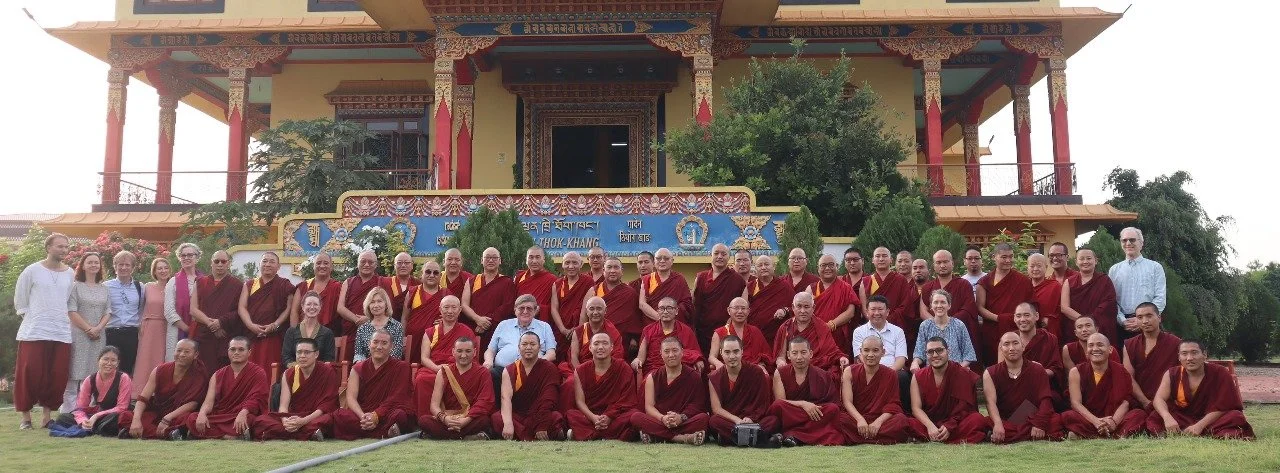
Mundgod monastery leadership meeting with the Tukdam Project team for a joint update with Emory-Tibet Science Initiative colleagues on research results and feedback for next steps in the collaboration. October 2023
Summary of the Relevance of the Tukdam Study
Russian team discussing the study of tukdam with the Dalai Lama, March 2022
In Tibetan Buddhism, death, as the moment when coarse body and subtle mind disassociate, offers the greatest possibility for comprehending this moment and thus, actualizing spiritual realization. Because of this, various practices are performed at the moment of death with the ultimate aim of realization of the nature of reality and the nature of mind, and often involve extensive methods to cultivate wisdom and compassion that benefit other beings. Those who have achieved this, recognized after death in some practitioners by the observation of certain signs that exemplify the tukdam state, are considered community exemplars of realization. Further investigation among living practitioners could provide scientists deeper insight into the quality of mind that these practitioners possess, and at the end of life, a unique opportunity to understand how practices in life impact the biology of death and dying.
The study is motivated by advancements in contemplative neuroscience in the last several decades as well as energized by the support of the XIV Dalai Lama. His Holiness actively supports and engages in collaborations with scientists to investigate the changes in the body and mind that contemplative practices create in order to provide evidence of their benefits and encourage incorporation of these practices supporting happiness and well-being globally.
His Holiness describes tukdam as it relates to subtle consciousness and the experiences the practitioner will encounter upon entry into the state. He asks the scientists if there are any current understandings in science that could explain what is observed in tukdam. He encourages the research team to begin investigations as soon as clinical death is declared even prior to confirmation of the tukdam state. He describes that tukdam is difficult to declare in the first days after clinical death.
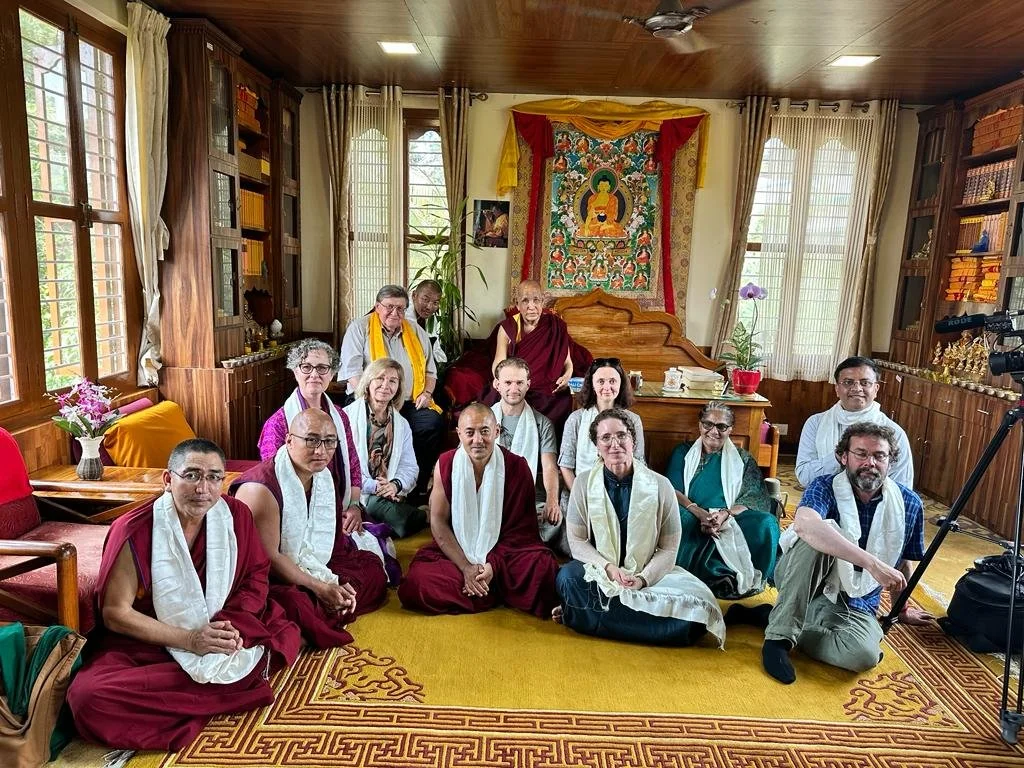
His Holiness Gaden Tri Rinpoche (center) in his room receiving the Tukdam Project team at his residence. He kindly bestowed guidance to the team on key points for the research approach related to the Guhyasamaja cycle of practice cultivated by many practitioners who enter tukdam in the Geluk School of Tibetan Buddhism.
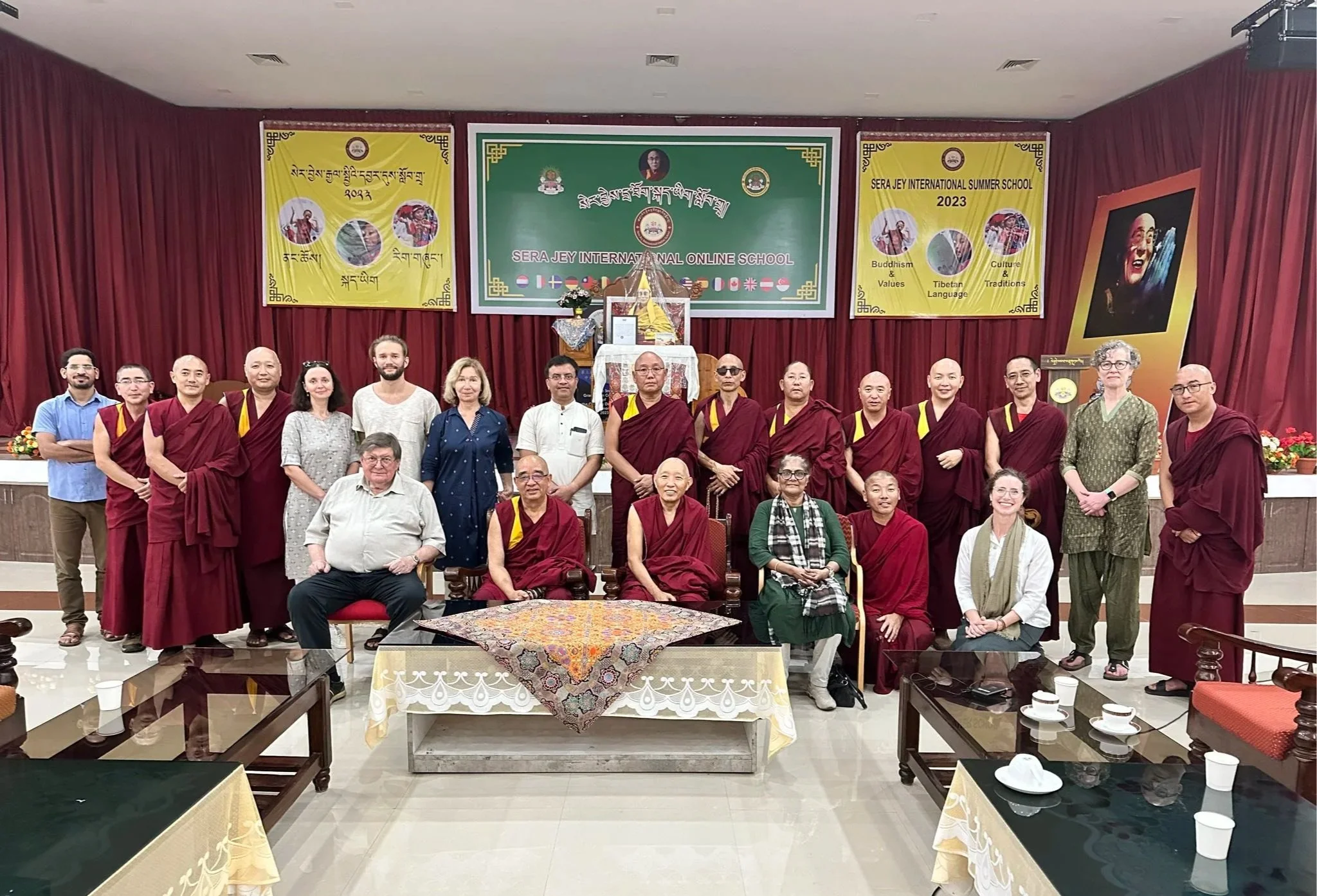
Bylakuppe monastery leadership meeting with the Tukdam Project team for research updates and guidance. October 2023
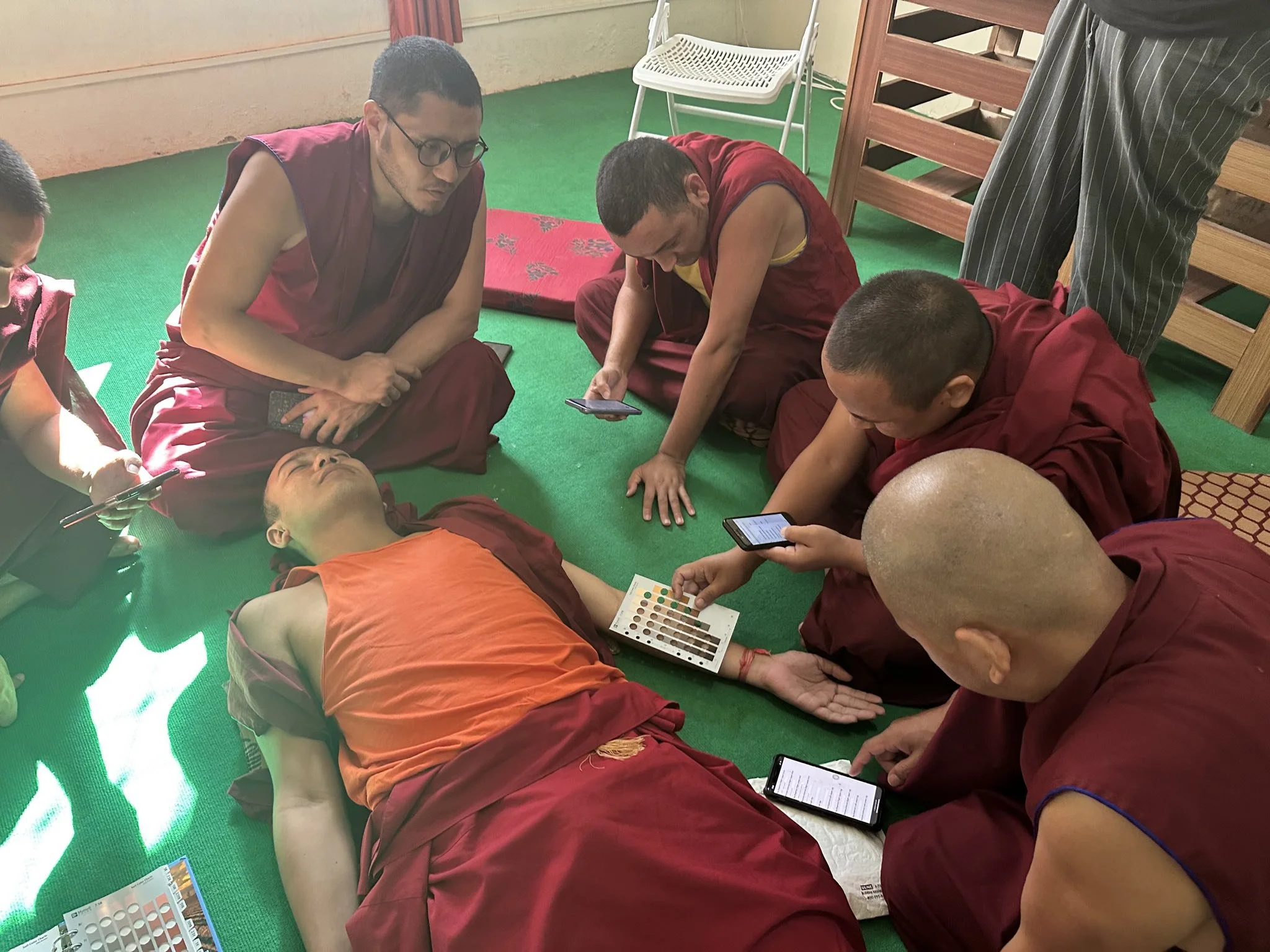
Field team members training on the Munsell color card system for standardized measures of skin color and entering into the digital data collection system.
-
Over the last four decades, the field of forensic sciences and, particularly the subfields of forensic anthropology, medicine, and pathology, have made significant progress in the ability to accurately estimate time since death through access to and assessment of actualistic studies of human remains throughout the postmortem period (e.g. The University of Tennessee Anthropological Research Facility in Knoxville, Tennessee; Forensic Anthropology Center at Texas State University in San Marcos, Texas; The University of Quebec at Trois-Rivières site for Research in Experimental and Social Thanatology in Quebec, Canada).
Such research studies allow for unique opportunities to investigate differential decomposition in various settings across this critical interval of physiologic change. Until these developments, the systematic study of long-term body decomposition had apparently not advanced substantially since the 13th century when Song Ci, a Chinese physician in China known as the world’s first forensic entomologist, made his postmortem assessments that informed publication of his coroner’s manual that became the official standard for generations in China.
Where differential decomposition can be visually appreciated and scientifically measured, observing and explaining the non-random distribution of those external and internal changes in specific climate zones, and the variables that may help explain their presence and patterning, is key to understanding if a body may have been moved from one location to another, from one position to another, and to highlight areas of the body that may exhibit ante- and perimortem trauma.
Within the fields of forensic anthropology and forensic medicine in general, the ability to provide accurate time since death estimates that minimize error, maximize precision, and consider a multitude of variables is a critical component of all forensic and medico-legal investigations that focus on identification of human remains and the circumstances surrounding death.
Contrary to many forensic cases where date of death is often unknown, the tukdam study begins observations with that critical information and progressively assesses, through external testing measures (temperature, skin elasticity) followed by photography and videography, decompositional changes over time. The study observes and records any decompositional changes associated with the states of pallor, algor, rigor, and livor mortis, as well as progressive changes in skin color and skin breakdown in an environment where variability in climate and ecological factors may vary from case to case.
The potential contributions to forensic science:
Exceptional circumstances where human putrefactive changes do not follow their predictable general pattern and demonstrate postmortem plasticity of time, environment, and position, as well as potentially the decedent’s psychophysiological engagement with the dying context itself.
Documentation of deviations from the anticipated expected rate and pattern of decomposition.
Explore variation in the normal progression of the postmortem process, in odors emitted, and in other biological markers such as insect and microbial activity.
Document the forensic significance of both intrinsic and extrinsic taphonomic variables that may contribute to differential and attenuated decomposition.
Contribute to evaluating documented inconsistencies in the postmortem interval in an underappreciated and underreported part of the world.
Investigates the possible relationship between a life of meditative practice and/or cultivation of specific qualities of mind, and the entrance into a state of tukdam and the postmortem phenomena observed.
-
The study of tukdam provides an opportunity to observe the possible persistence of brain activity following cardiopulmonary cessation as observed in a small sample of intensive care unit patients taken off life support and in various animal models (Norton et al., 2017; Auyong et al. 2010; Grigg et al., 1987; van Rijn et al., 2011; Borjigin et al. 2013), as well as potential systemic activity such as in the hypothalamo-pituitary axis (Arita et al., 1993).
We know from animal research and some limited human case studies (Norton et al., 2017) that when cardiac function ceases (Auyong et al., 2010; Grigg et al., 1987), a remnant brain signal measured by EEG persists for up to 30 minutes, until arterial blood pressure ceases (van Rijn et al., 2011). There has also been significant variation in the EEG oscillations emitted for such cases – both human and animal (Xu et al., 2023). Research at George Washington University (Chawla et al., 2017) shows about half of patients who pass in the ICU display end-of-life electrical surges (ELES), with waveforms at higher frequencies than those observed in animals. A high amplitude slow wave or “delta blip” has been reported within 1 minute of clinical death for rats where decapitation in rats has been thought to be indicative of synchronous neuronal death (Borjigin et al., 2013). Likewise, high-frequency synchronous gamma oscillations (25-100 Hz) have been reported in the rat brain for up to 30 seconds following cardiac arrest (Borjigin et al., 2013). Although no well-defined EEG states have been observed following early cardiac arrest for humans, most often, EEG activity declines dramatically well before the last heartbeat.
Yet, some show power in higher frequency ranges before arterial blood pressure cessation alongside an increase in 95% spectral edge frequency immediately before death (Norton et al., 2017). The significance of heterogeneous brain activity in the peri- and (early) postmortem period is unknown and is the source of significant controversy.
The tukdam state is a way to observe possible persistence of peripheral biology activity and understanding potential sustained responses vis-à-vis glucagon effects on glycogen cycling, remnant metabolic activity in specific cell groups, etc.; and similarities and differences with mechanisms of estivation and brown adipose tissue activation (see, for instance, Staple 2016).
Such understandings about the processes the body and mind are undergoing at end-of-life, are critical for medical teams, as well as for families, as they face difficult ethical and moral decisions around end-of-life care, including decisions about organ donation. Increasing our knowledge about the internal experiences of an individual just prior to and after medical death can further our ability to facilitate an ideal death whenever possible, regardless of the medical, cultural, or religious context in which the person is living and dying.
-
Culture shapes our biology and our biology is deeply shaped by our cultural practices. Burgeoning research on contemplative practices over the last several decades, on which CHM has had the fortunate opportunity to contribute, shows beneficial outcomes to wellbeing across numerous psychophysiological measures. We see the reduction of distractibility related to self-reports of greater happiness and greater well-being through cultivated focused attention and present-centered awareness. Reductions in depression and anxiety have been shown to enhance specific cognitive capacities, such as self- and other-perception.
Various contemplative practices have been shown to ameliorate physiological and inflammatory markers of stress, such as cortisol, blood pressure, heart rate, and triglycerides, and other lipids, C-reactive protein and numerous dimensions of peripheral cytokine expressions (see, for instance, Pascoe et al., 2017; Sanada et al., 2016; Zeidan et al., 2011). We also see the slowed progression of chronic inflammatory disease, particularly those with mental health co-morbidities, strengthening immune response, increasing vagal tone, slowing cellular aging and elongating telomeres, and modulating the inflamma-aging pathways (see, for instance, Davidson et al., 2003; Carlson et al., 2013; Epel et al., 2009).
Maria Kozhevnikov’s work has also shown several practices specific to Tibetan Buddhism (vajrayāna practices) create heightened arousal -- heightened sympathetic activation and phasic alertness, while others can intentionally elicit heightened parasympathetic activity and tonic alertness (such as a calm and alert state of mind).
Yet today we have very little work that has focused on how individuals vary across different outcomes of contemplative practices and the implications for a life of meditation lived on the outcomes of both well-being and dying phases. What we do know is that expert meditators compared to age-matched novice meditators, demonstrate significantly different activity in the brain – both structural and functional (Brefczynski-Lewis et al., 2007). We know that there is a wide degree of individual variation across outcomes, even among age-matched novices and meditation-naïve.
We also know that there's a lot of individual variation in response to different practice types, whether it be mindfulness (focused attention), lovingkindness/compassion, open monitoring, and so forth. We also know that the expert-level meditators, those who we might call ‘Olympic level’ practitioners, who have achieved more than 60,000 hours of meditation over the course of their lifetime, also show distinct physiologies compared to the meditation-naïve, such as particular sustained brainwave forms. (Brefczynski-Lewis et al., 2007)
We’ve learned that expert meditators have altered structure and function in the brain – sustained gamma waves irrespective of state/activity and heightened emotional regulation. They show differentiated immune response and inflammatory reactivity ameliorated to a given stimulus. And we also know that a select few of the expert meditators seem to present a different physiology in the dying process (Brefczynski-Lewis et al., 2007).
-
Tukdam has been widely recognized historically in the Tibetan cultural world as one of the unexcelled final states of realization.
However, its specific externally recognized signs related to it as a psychophysiologic state is minimally mentioned in the Buddhist canon, including the Kangyur, or scriptures of the Buddha’s word; the Tengyur, or commentaries on those scriptures; the Abhidharma, or the compilation of Buddhist psychology, philosophy, and metaphysics; the Revealed Treasures, or texts hidden to be revealed for applicability in later times; and later commentaries.
The earliest written historical account of the external signs of tukdam derive from the biography of Je Tsongkhapa’s passing into paranirvana in 1419, documented by his disciple Khedrup Je in Entryway of Faith (Rnam thar dad pa’i ’jug ngogs). The most detailed account of the different external signs demarking tukdam and their condition-dependent variation are from Karma Chakmé (1613-1678), an accomplished scholar-yogin who wrote one of the most highly regarded meditation retreat manuals called Mountain Dharma (Ri chos mtshams kyi zhal gdams). He warns us that an individual who enters tukdam, as the meditative concentration or samadhi at the time of death, may have more subtle signs than one might think and that many of the signs associated with tukdam, such as an upright meditation posture, fragrant odor, warmth at the heart, and attenuated decomposition, depend on the physical condition of the individual before they died.
Thus, the Tukdam Study is the first investigation to document the external signs related to this phenomena across individuals in different physiological states and geographic regions to explore its plasticity of physical presentation and duration. Likewise, the Tukdam Study is recording orally transmitted accounts of tukdam as they relate to the historical (hagiographic biographical) textual accounts.
-
Burgeoning research on meditation shows beneficial outcomes to wellbeing – across numerous psychophysiological measures:
Reduces distractibility, stress reactivity, depression and anxiety
Enhances cognitive capacities such as attention and perception
Modulates pain responses
Ameliorates physiological & inflammatory markers of stress
a. E.g., cortisol, blood pressure, heart rate, triglycerides, C-reactive protein, and peripheral cytokine expression
b. Slows progression of chronic inflammatory disease with mental health co-morbiditiesStrengthens immune response
Differential regulation of parasympathetic (e.g, vagal) & sympathetic activity
a. Intentionally cultivated heightened arousal vs. calm, alert state of mindElongates telomeres and slows cellular aging
Importance of the Science
"Understanding Tukdam" Stanford Talk by Dr. John Dunne
Dunne introduces what tukdam means, tantric theory related to entering the tukdam state, and the Tukdam Study in his talk "Between Life and Death: Understanding Tukdam," Tibetan Buddhism Lecture Series, The Ho Center for Buddhist Studies at Stanford, February 2023