The Field Study of Long-Term Meditation Practitioners and the Tukdam Post-death Meditative State
The Tukdam Study
As researchers around the globe study the process of dying and gain a deeper understanding of the cultural and religious context of death, labels of being "alive" or "dead" fail to capture the complex processes that many cultures and faiths believe actually exist on a continuum.
A global community of field researchers are collaborating on a study of an ancient postmortem meditative state known as tukdam, entered by present-day expert Tibetan Buddhist practitioners and how practices through which the state is entered might offer insight into mental, spiritual, and physical well-being during the death process, both for the dying and for their support community.
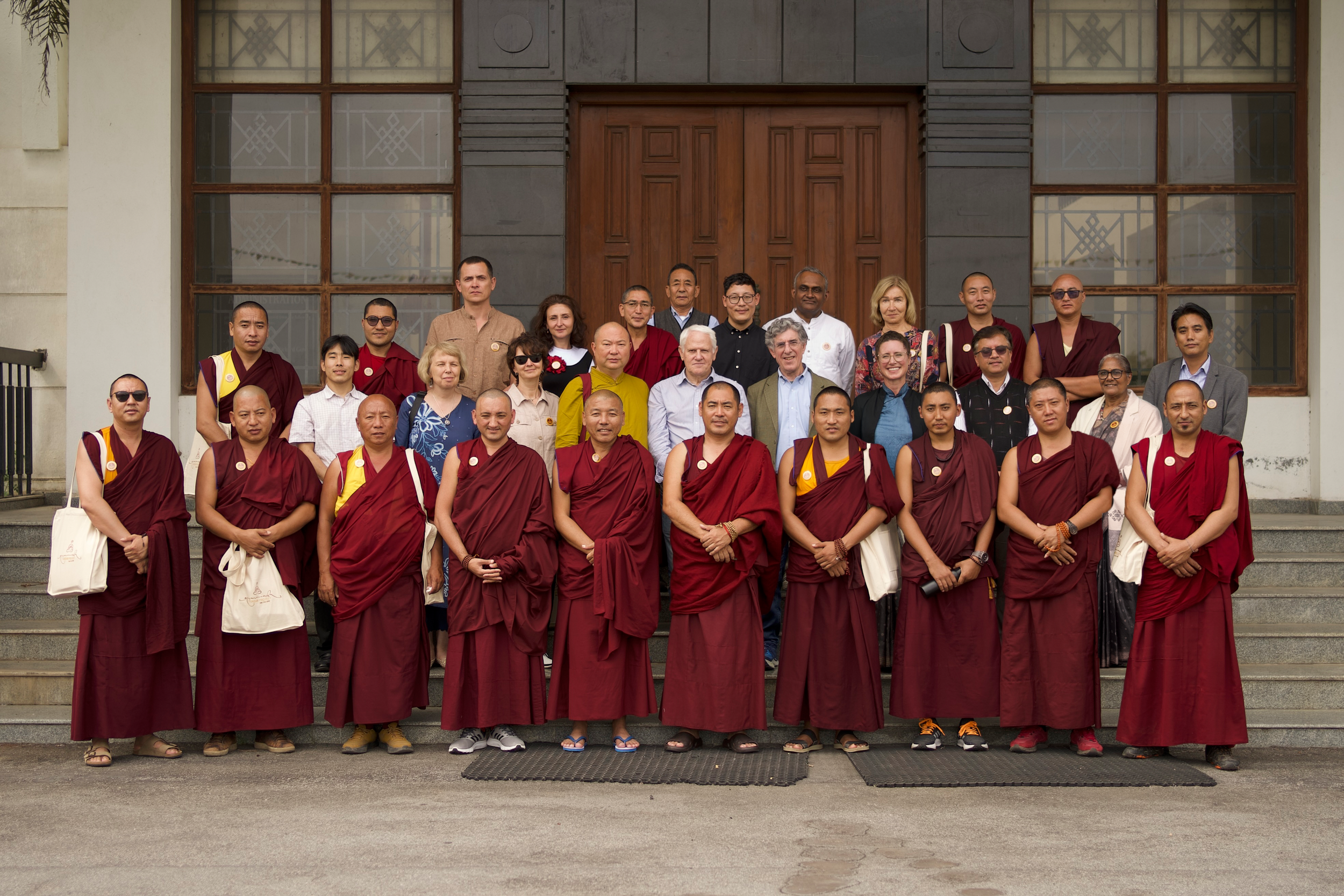
The Dalai Lama discusses tukdam with scientists, including Dr. Richie Davidson and Dr. John Dunne, with translation support provided by Geshe Thupten Jinpa. Event organized by Mind & Life Institute at the Dalai Lama's residence in Dharamala, India, on October 13, 2022. Recording is marked at the beginning of His Holiness' comments and continues approximately 20 minutes.
Summary
The interdisciplinary nature of this research makes it scientifically significant across several areas of study including neuroscience, forensics, human biology, anthropology, and Buddhist studies. From the Tibetan perspective, tukdam can illustrate an epitome of a lifetime of advanced practice investigating the fundamental nature of mind.
The Dalai Lama on the Nature of Mind in Context of Tukdam
Excerpt on tukdam from conversation with His Holiness the Dalai Lama in the virtual book launch of "Science and Philosophy in the Indian Buddhist Classics, Volume 2: The Mind" from his residence in Dharamsala, HP, India on November 13, 2020. Brief comments from co-editors CHM Tukdam Study Scientist Dr. John Dunne, Distinguished Chair in Contemplative Humanities and Geshe Thupten Jinpa, His Holiness' principal translator, Compassion Institute Founder. Recording marked at beginning of comments and continues approx. 40 minutes.
This science has cross disciplinary importance on forensics, neuroscience, biocultural and comparative human biology, Buddhist studies, and meditation outcomes.